
Client Success Story
From Fragmented to Focused.
AT&T × TopRank Partners
How a full-spectrum catalog rebuild turned a fragmented retail accessories business into a creative-led growth engine: converting more, earning more per unit, and doing it on 40% of the original catalog.

AT&T on Amazon: A Catalog That Had Outgrown Its Strategy.
AT&T's consumer electronics accessories division (chargers, power banks, wall adapters, wireless stands, Bluetooth speakers, and connected devices) had a sizable Amazon presence. But size wasn't the problem. Direction was.
The catalog had grown to 295 active offers across 106 parent ASINs. Many of those listings were underperforming: burning long-term storage fees, pulling down the brand's conversion averages, and diluting the catalog's overall quality signal. Advertising was spread across too many SKUs with too little creative differentiation. The content that did exist wasn't built to convert.
The Core Problem
A large, unfocused catalog with content that wasn't earning its shelf space. Conversion sat at 7.5%. Ad campaigns lacked creative ammunition. There was no forecast for future growth, no strategic framework for what to keep, cut, or build next, and long waits for responses when issues came up.
AT&T needed a single partner who could own the full picture (creative, catalog health, advertising) and make them work as one system rather than three separate vendor relationships.
Four Workstreams. One Operating System.
TopRank Partners engaged in June 2025 with content production and moved to full account management by September. The work organized around four parallel workstreams, each reinforcing the others:
1. Content That Converts
Complete A+ Content systems built across every product category: chargers, wireless stands, car mounts, power banks, wall adapters, and Bluetooth speakers. Each with category-specific visual hierarchies, feature callout patterns, and lifestyle photography. Not decoration: conversion infrastructure designed to answer the questions an electronics shopper asks in under five seconds.
2. Catalog Rationalization
Systematic identification and removal of underperforming SKUs: items burning storage fees, dragging down conversion averages, and diluting brand signal. The catalog went from 295 to 120 active offers, not because the business shrank, but because the deadweight came out. Every remaining listing earns its shelf space.
3. Advertising Restructure
Ad spend pivoted away from low-performers and concentrated on profitable segments: the SKUs with the creative ammunition to convert. Helping sell down unproductive inventory while redirecting budget to listings with real conversion infrastructure behind them.
4. Strategic Cadence
Regular strategic conversations (frank, friendly, no-pressure) that replaced the previous vendor dynamic. Services and fees don't expand until both sides are optimized and growing. This isn't a campaign with a start and end date. It's an operating partnership built to compound.
Building the Content That Converts.
Before ad spend was restructured, TopRank's creative team rebuilt AT&T's Amazon presence from the product page up. A+ Content isn't decoration, it's conversion infrastructure. Every module was designed to answer the questions an electronics shopper asks in under five seconds: What does this do? Why this one over the alternatives? Will it work with my setup?
TopRank developed complete A+ Content systems across AT&T's product categories (charging kits, wireless stands, car mounts, power banks, wall adapters, and Bluetooth speakers), each with category-specific visual hierarchies, feature callout patterns, and lifestyle contexts. This level of creative investment across every SKU is what moved Unit Session Percentage from 7.5% to over 12.9%.
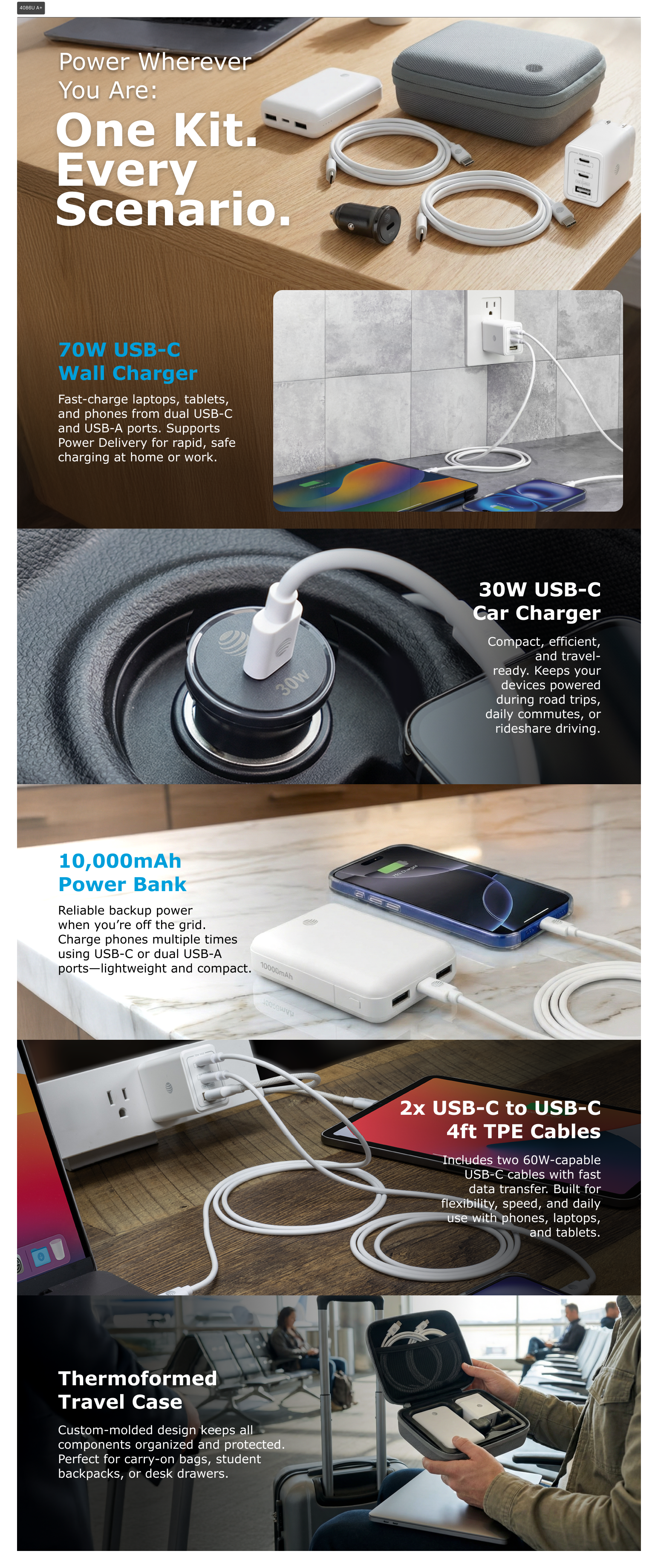
Module Spotlights
Three approaches to A+ modules, each designed for a different shopper mindset.
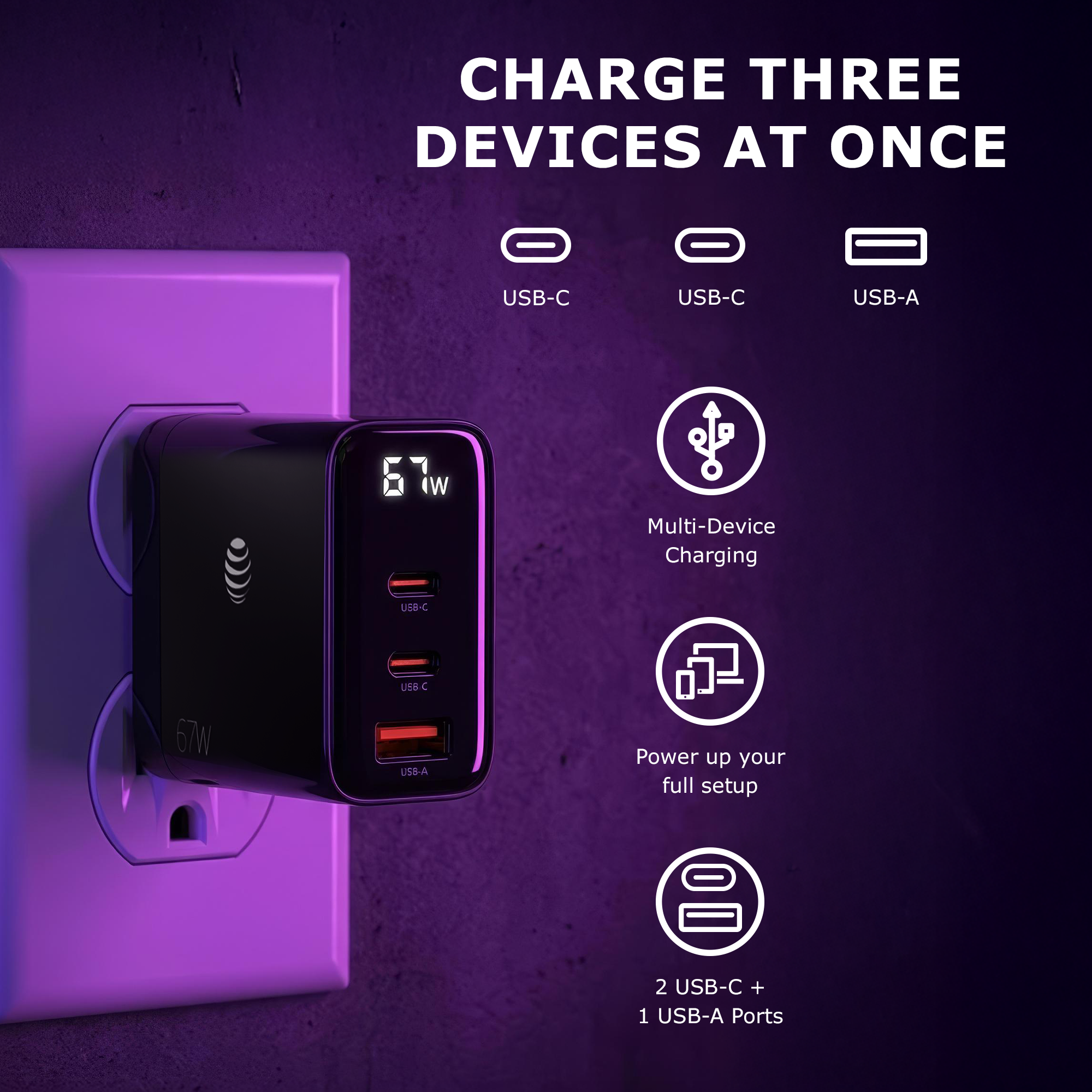

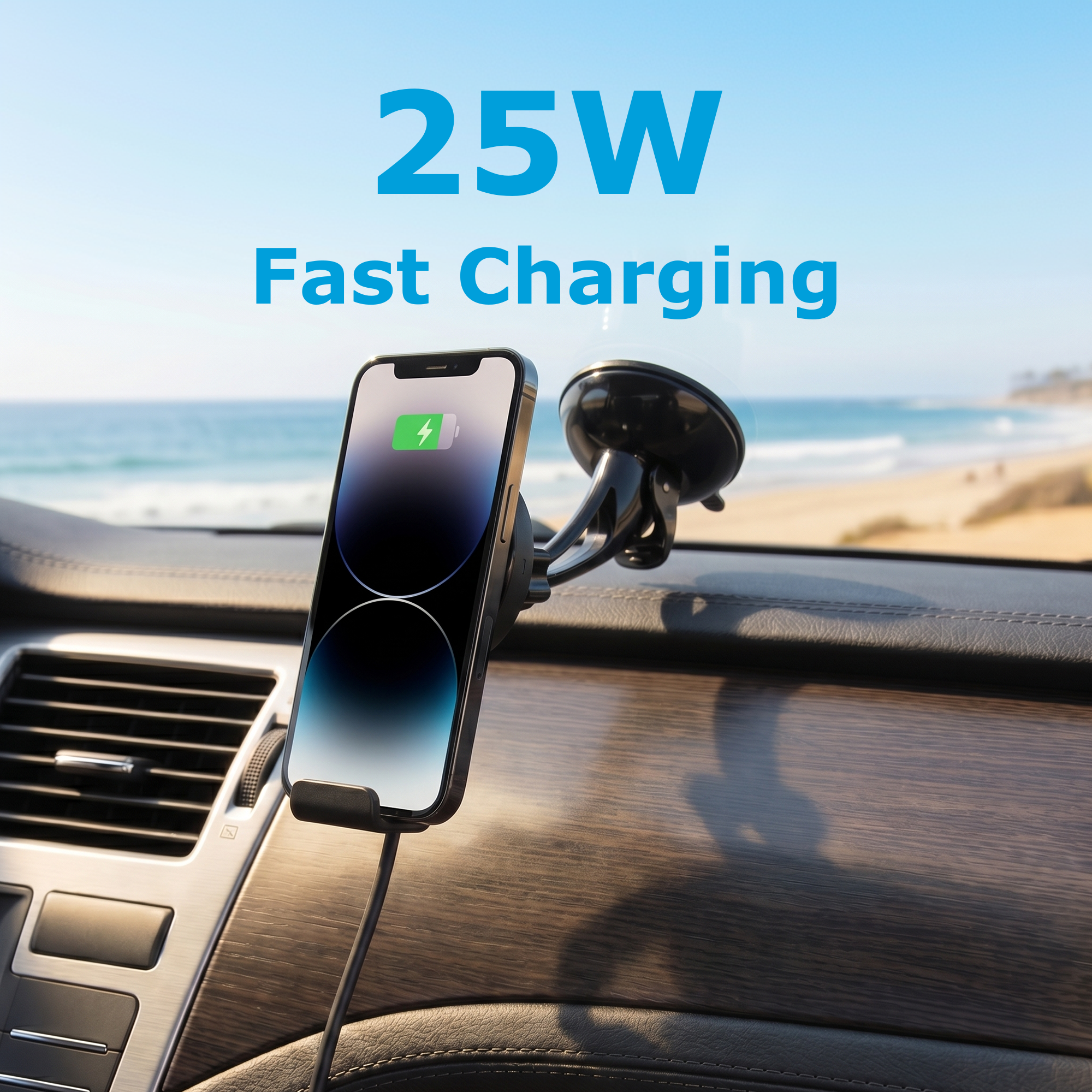
Creative That Spans the Product Line.
TopRank's creative engine didn't stop at A+ Content. The team built a production pipeline sized to AT&T's launch cadence and refresh backlog: photography, infographic, and module systems templated so quality stays consistent at volume across every product category.
AT&T's accessory catalog spans consumer electronics categories that each require distinct visual treatment: a wall charger needs spec-forward product photography, a Bluetooth speaker needs aspirational lifestyle imagery, a power bank needs both. TopRank's creative team built category-specific visual systems rather than applying one template across the board.
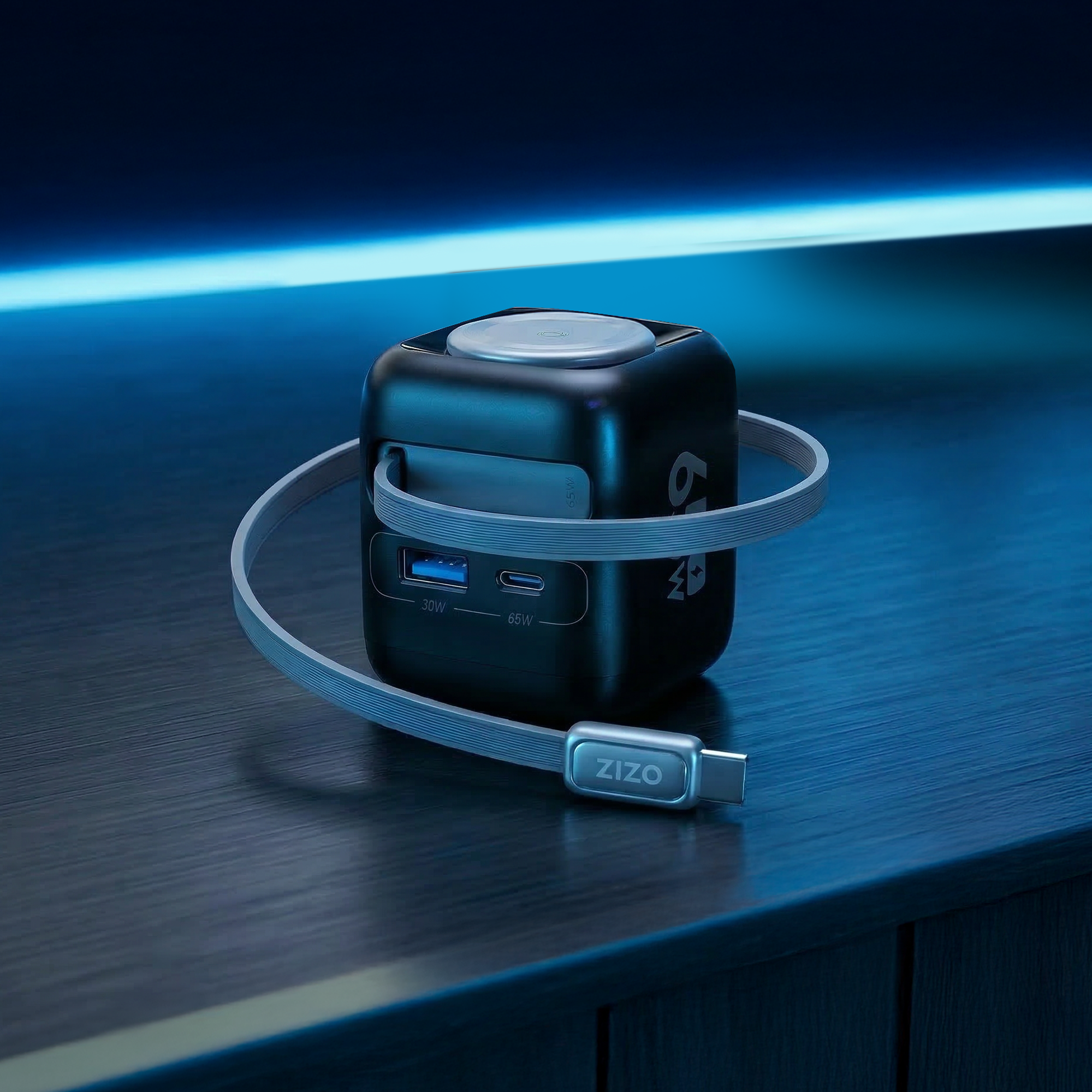







Creative Spotlight
Three images that represent the creative standard TopRank builds to.


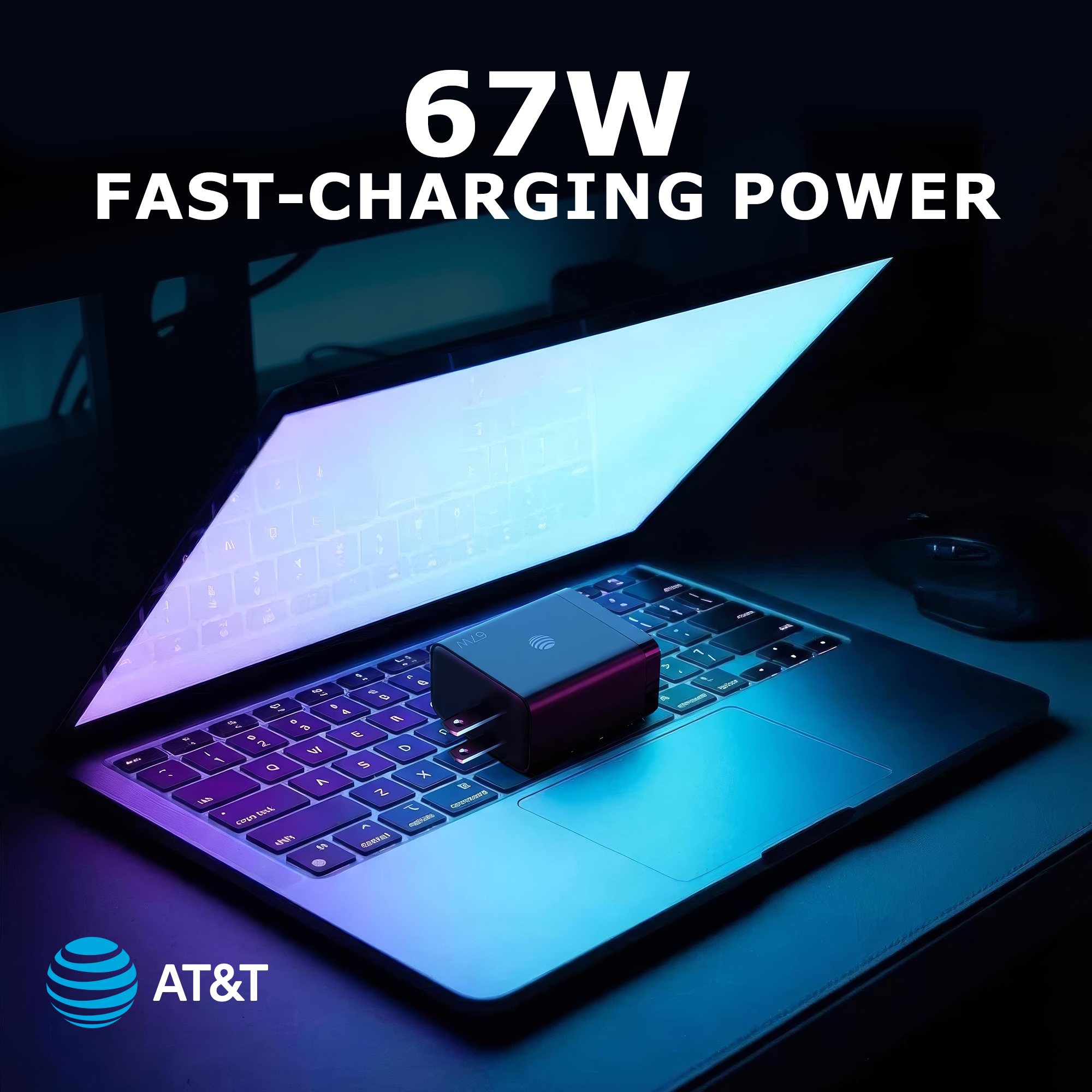
Every piece of creative serves dual duty: it converts at the point of sale AND it feeds the advertising machine. The creative work isn't separate from the performance, it IS the performance. As the AT&T team put it: "Content, content, content."
Fewer SKUs. Working Harder. Earning More.
The data tells a clean version of the story. Three metrics moved at the same time, and they moved in directions that, together, are hard to fake. Baseline figures reflect AT&T's January to May 2025 trailing average, before TopRank content launched. Current figures reflect the trailing three-month average (March to May 2026), about a year into the engagement.
Conversion Rate Lift
Avg. Selling Price Lift
Catalog Rightsized
Conversion Rate: 7.5% → 12.9%
Unit Session Percentage (Amazon's measure of how many sessions convert to a sale) averaged 7.5% across the five months before TopRank engaged, dipping to a low of 5.8% in March 2025. In the trailing three months, it averaged 12.9%, peaking at 13.79% in May 2026. That's a +5.4 point absolute lift and a +71% relative lift on a metric that is notoriously hard to move at scale.
Average Selling Price: $15.93 → $19.62
Pre-TopRank, ASP averaged $15.93 and was trending down, hitting a trough of $14.81 in April 2025. The trailing three-month average is $19.62, with a peak of $20.18 in April 2026. The lift came from two things working together: a cleaner mix that surfaced the assortment's premium SKUs, and stronger creative that earned the price point on the detail page.
Assortment: 295 → 120 Active Offers
This is the counterintuitive part. The catalog got smaller: a 59% reduction in active offers, with parent items dropping from 106 to 48. The assortment didn't shrink because the business shrank. It shrank because the deadweight came out: SKUs burning long-term storage fees, dragging down conversion, and diluting the brand. The remaining catalog is roughly 40% of the original, and every metric on it is up.
AT&T is now generating more revenue per session, at a higher unit price, on roughly 40% of the catalog footprint it carried a year ago. Fewer SKUs, working harder, earning more.
Source: AT&T monthly performance data, January 2025 to May 2026. Content launch June 2025. Full account management September 2025.
Why It Worked.
Three things made this engagement land where similar ones often stall.
One Partner, Every Lever
Creative, catalog, and ad spend are usually run by separate vendors on separate timelines. Owning all of it meant a decision in one workstream immediately improved the others: sharper listings made ad dollars work harder, a cleaner catalog made creative cheaper to produce, better creative made the rationalization conversation easier across the organization.
Production at Scale
The bottleneck on most retail accounts isn't strategy, it's whether the assets actually get made. TopRank built the engine to produce them at AT&T's launch cadence, and the team felt the difference at every product launch and catalog refresh.
Built to Last
Templates, specs, and a recurring catalog hygiene cadence mean the wins compound instead of decaying the moment a project ends. The commercial model runs on alignment: services and fees don't expand until both sides are optimized and growing. The relationship moves on momentum, not upsell.
Sharper content improved conversion. Better conversion justified the ad spend. Smarter ad allocation funded more creative. A leaner catalog made every dollar work harder. Each element amplified the others. That's not a campaign. That's a flywheel.
In Their Own Words
AT&T
Q: What was the biggest challenge you were facing on Amazon before working with TopRank?
Lack of content that converted to sales, underperforming ad campaigns, poor ROI, no forecast for future growth, lack of guidance on strategy and execution, and long waits for responses to issues.
Q: What has the experience been like working with our team day-to-day?
Great people and personalities with expertise in multiple areas of business. Helping sell down unproductive inventory and pivot ad spend to our profitable segments. Providing a suite of sales-converting content at launch, the fun part of my day!
Q: What results or changes have stood out to you the most?
Content, content, content!! The conversion and efficiency of our ad spend, the frank and friendly nature of our strategic conversations. No pressure on adding services and fees until we are both optimized and growing. Feels like a real partnership rather than vendor and client. You all care about our brand and growing it as much as we do!
Q: How would you describe TopRank to another brand considering marketplace management?
Excellent Service, expertise, and true partners in building a brand. Laid back yet professional!
Q: Is there anything we do differently from other partners you've worked with?
CONTENT Soup to Nuts. This is the only partner that includes the creative services along with account health and ad budget management, so really a complete solution for Amazon and digital conversion.
Q: What would you say to a brand that is on the fence about making a move?
Give them a try, there is nothing to lose and everything to gain!
From Cleanup to Growth.
If year one was about taking deadweight out of the catalog, year two is about putting the right weight back in. With the foundation stable (listings converting, ASP trending up, the assortment focused), the conversation has shifted from rationalization to growth.
Assortment Expansion
TopRank is working with AT&T on a category-level assortment gap analysis: search demand, share-of-voice, conversion performance, and competitive landscape across each subcategory. The objective isn't to grow the catalog back to where it was, it's to grow it deliberately, adding only the SKUs that meet the new operating bar.
Forward Roadmap
From that diagnostic, the teams are building a forward roadmap together: which subcategories to prioritize, what creative and merchandising lift they'll need to launch into, and how the existing engine (listing production, ad spend, hygiene cadence) scales to support them.
Creative Headroom
Alongside the assortment work, TopRank continues pushing the creative bar (particularly video, lifestyle, and A+ premium modules where the brand still has headroom) and deepening the data layer underneath every catalog decision so expansion is informed, not aspirational.
The work that started as a turnaround is becoming an operating system. The next phase is about pointing that system at growth.
Is Your Amazon Channel Ready for a Breakthrough?
If your brand has strong products but a fragmented Amazon presence, the gap is likely a systems problem, not a tactics problem. TopRank builds the system.
Request a Free Assessment